Collection: Lead-Free Solder Bar for Industrial Soldering & Tinning
-
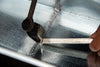
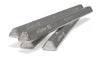
97Sn/3Cu Lead-Free Tri-Bar Solder, 5/16" x 17"
Regular price $57.99Regular priceUnit price per -
Alpha SAC305 Lead-Free Bar Solder, 96.5Sn/3.0Ag/0.5Cu, RoHS Compliant, Tri-Kilo Bar, 2.2 lbs
Regular price $236.19Regular priceUnit price per -
Pure Tin Bar, 1 lb Bars - RoHS Compliant
Regular price $59.99Regular priceUnit price per -
97Sn/3Cu Lead-Free Bar Solder, 1 LB Bar
Regular price $52.99Regular priceUnit price per -
Alpha 99.3Sn/0.7Cu Lead-Free RoHS Bar Solder, Tri-Kilo Bar, 2.2 lbs
Regular price $111.87Regular priceUnit price per -
Alpha 99.3Sn/0.7Cu Lead-Free RoHS Bar Solder, 50 LB Case
Regular price $2,400.00Regular priceUnit price per -
95Sn/5Sb ("95/5") Lead-Free Bar Solder, 1-lb. Bar
Regular price $50.99Regular priceUnit price per -
Sn96 Lead-Free Solder Bar, J-STD, 96.3Sn/3.7Ag, 1 LB Bar
Regular price $141.99Regular priceUnit price per -
Alpha SACX0307-Plus Lead-Free RoHS Wave Solder Bar, Tri-Kilo Bar, 2.2 lbs
Regular price $128.54Regular priceUnit price per -
Alpha SAC305 Lead-Free Bar Solder, 96.5Sn/3.0Ag/0.5Cu, RoHS Compliant, 50 LB Case
Regular price $5,250.00Regular priceUnit price per -
Alpha SACX0307-Plus Lead-Free RoHS Wave Solder Bar, 50 LB Case
Regular price $2,600.00Regular priceUnit price per
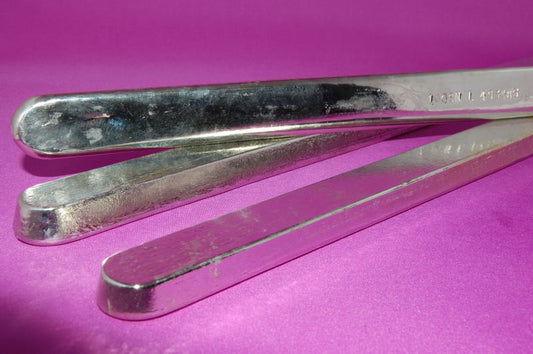

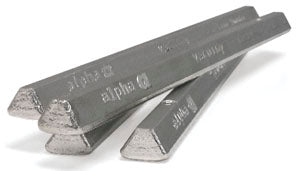
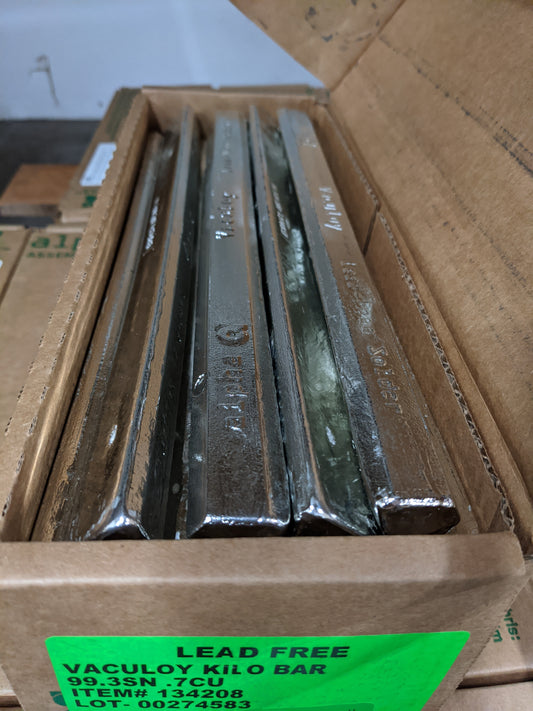

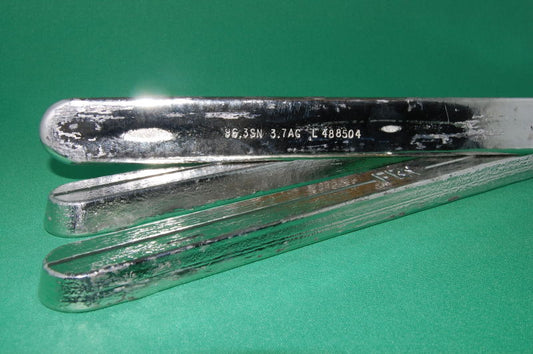
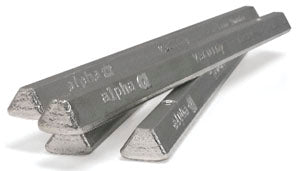
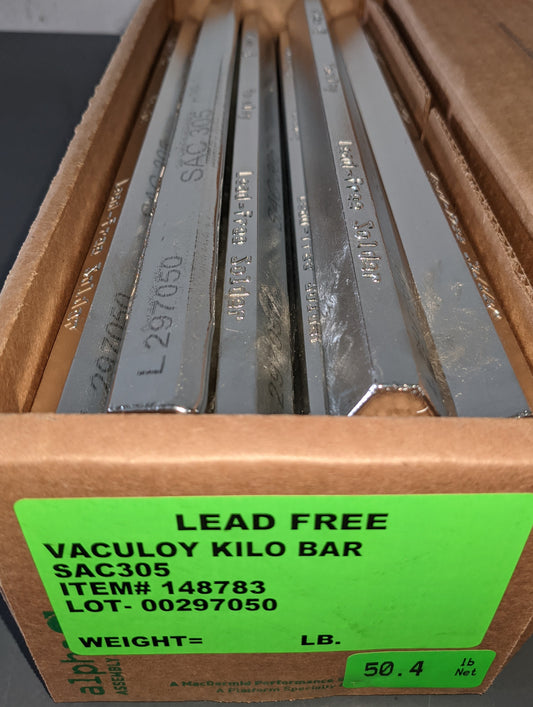
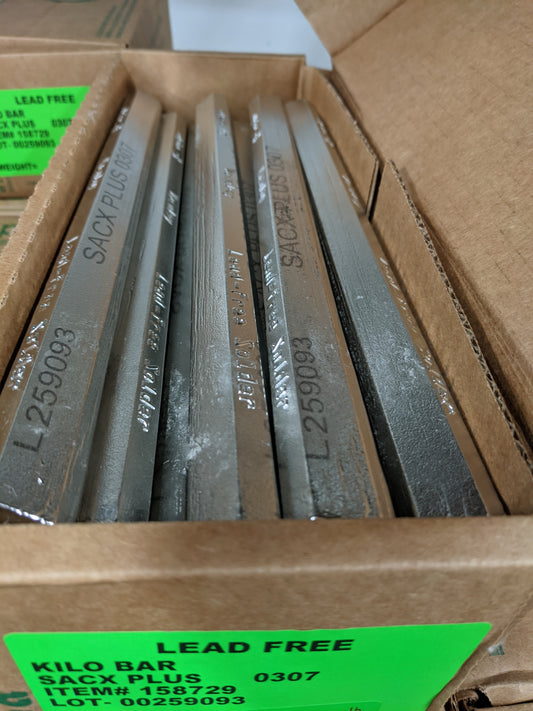
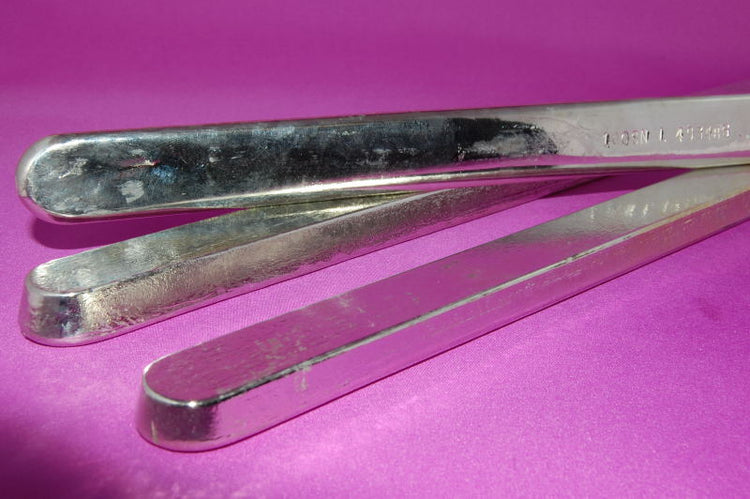
Lead-free solder bar is used where the product being assembled is required to be lead-free or your assembly requires a higher temperature solder. Common lead-bearing solder alloys have melting points of 361°F - 413°F, while Lead-Free solder bars melt at 426-590°F, depending on the alloy.
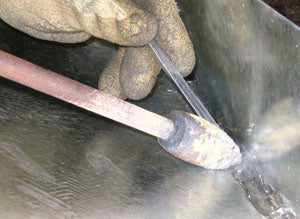
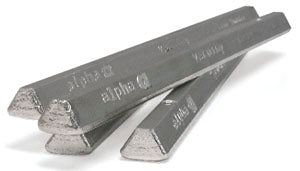
Melting lead-free bar in a solder pot can be quicker, and easier to automate, than soldering by hand with wire. Tri-Bar is a stick of solder that can be hand-held to provide a larger volume than wire solder for making soldered sheet metal seams. Solder pots that have a pump creating a wave are called wave solder machines or solder fountains. A static solder pot has no pump, so the part is simply dipped into the solder's surface.
WHICH LEAD-FREE SOLDER BAR SHOULD I USE ?
All lead-free solder bar alloys contain mostly Tin. Lead-free industrial solders have between 95% and 99.3% Tin, with the balance either Silver, Copper, Antimony or a combination. For tinning wires or component leads only, pure tin bar is the recommended choice. With a melting point of 450°F, pure tin coats parts with a protective layer so they can be soldered into an assembly later. Tinning pots can run on pure tin by itself, and it can also be added to a lead-free pot as a "sweetener" to adjust the blend.
To join parts, choose an alloy rather than pure tin: adding Silver or Copper gives a stronger joint (inter-metallic bond). For the highest joint strength SAC305 or Sn96 lead-free alloys containing 3.0% or 3.7% Silver is your best choice. The silver content in these alloys, however, makes it more expensive. If cost is most important to you then 97/3 (with 3% Copper) or 99.3% Tin, 0.7% Copper alloys would be good choices.
For soldering automotive parts 97/3 lead-free solder alloy is widely used. The 3% Copper content in 97/3 gives it the highest electrical conductivity of any solder, better for assembling high amp electrical parts. For sheet metal assemblies requiring lead-free solder 97/3 alloy is the industry-approved solder alloy.